Category Archives: Bez kategorii

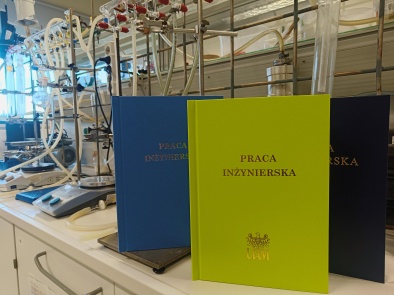
Poster Session of MSc Students 2025/26


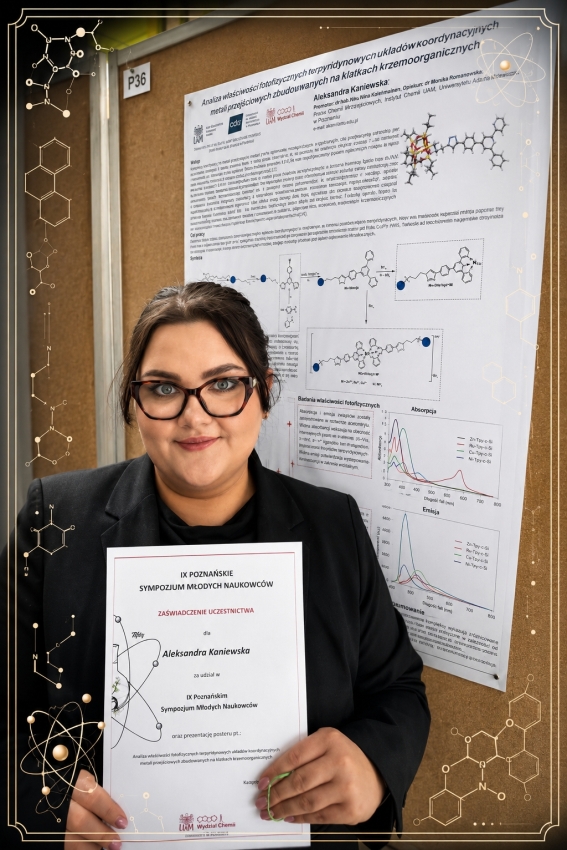
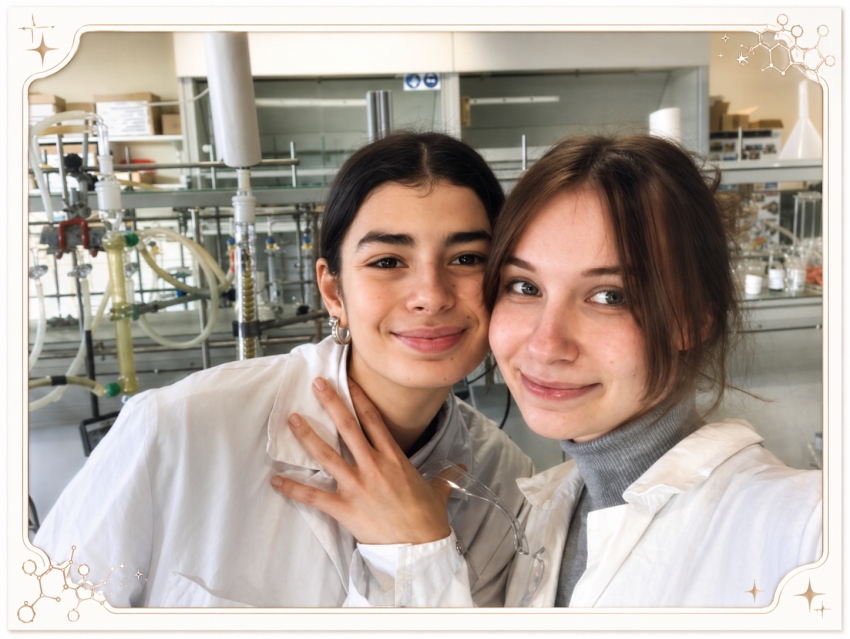
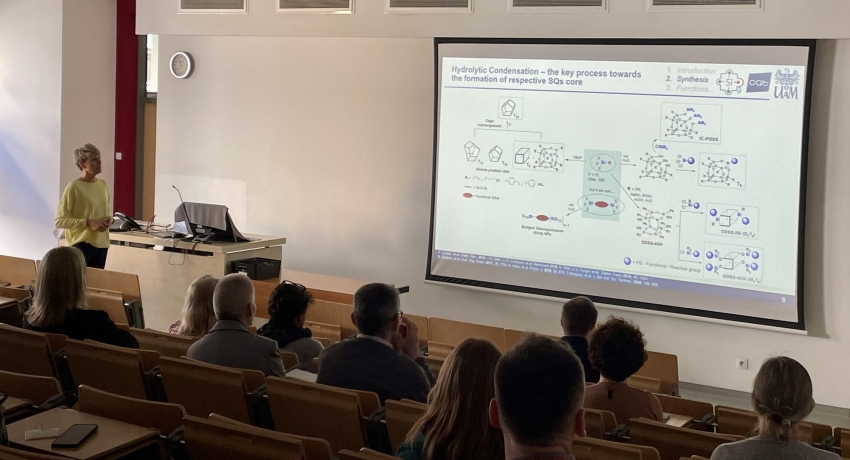
On May 18, 2026, the Faculty of Chemistry of Adam Mickiewicz University hosted a poster session featuring presentations by Master’s students of the 2025/2026 academic year. During the event, students presented the results of their thesis projects, providing an excellent opportunity for scientific discussion and exchange of ideas. Among the presenters was BSc Aleksandra Kaniewska, who presented her work entitled “Analysis of photophysical properties of transition metal terpyridine coordination systems anchored on organosilicon cages.”
Continue reading →

Study@Research no 212 for Karolina&Julia


We are incredibly proud! 🎉
In the IDUB UAM “Study@Research” Competition 212, funding has been awarded to the team led by Karolina Zacłona and Julia Zdunek — one of 92 funded proposals. Their project explores the photophysical properties of cage-like silicon compounds as anchors for tridentate N,N,N ligands in coordinating selected d-block metals and has been awarded funding of 10,000 PLN.

Looking forward to the discoveries ahead! 🔬✨

Faculty Seminar – April 17, 2026


Our Faculty Seminar is behind us! Last Friday, April 17th, we had the pleasure of hosting Prof. Beata Dudziec (AMU), who presented a talk titled “From Molecular Design to Macroscopic Effect: The Case of Silsesquioxanes.” The lecture highlighted hybrid organosilicon materials and how precise molecular design translates into macroscopic properties. Thank you for the inspiring talk—we look forward to the next seminars! 👩‍🔬👨‍🔬

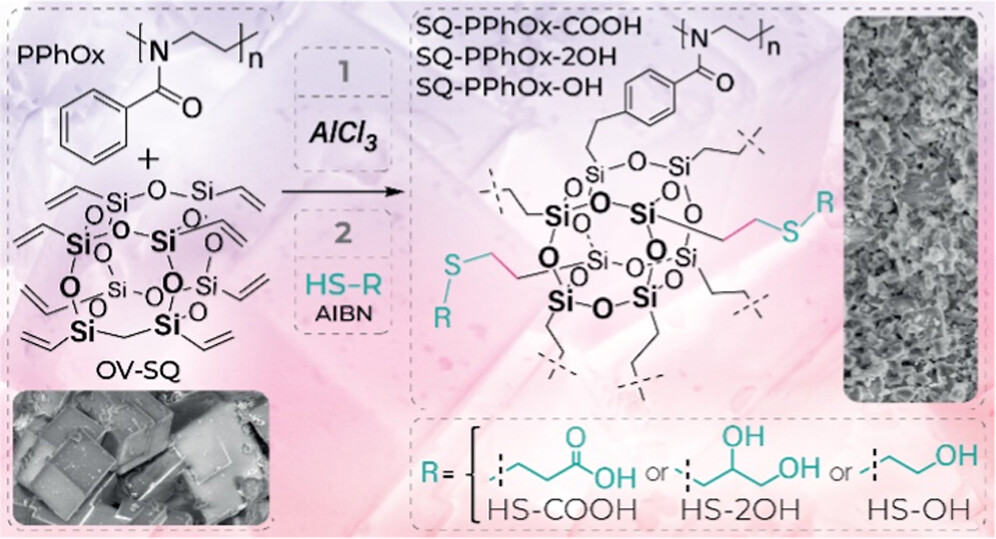
Poly(2-oxazoline) and silsesquioxanes? Yes! Yes! Yes!

Extremely proud of our last paper! This is a fruit of our cooperation with Prof. Cegłowski and Prof. Hoogenboom’s research groups. It reports on the development of advanced hybrid materials for environmental applications, combining poly(2-oxazoline)s with silsesquioxane frameworks. This work demonstrates effective removal of pesticides from water and introduces a novel integration of poly(2-oxazoline) chemistry with cage-like silsesquioxanes, representing one of the first examples of this approach.
The findings highlight excellent performance and significant application potential, underlining the value of strong international collaboration and its role in delivering impactful scientific results. Continue reading →

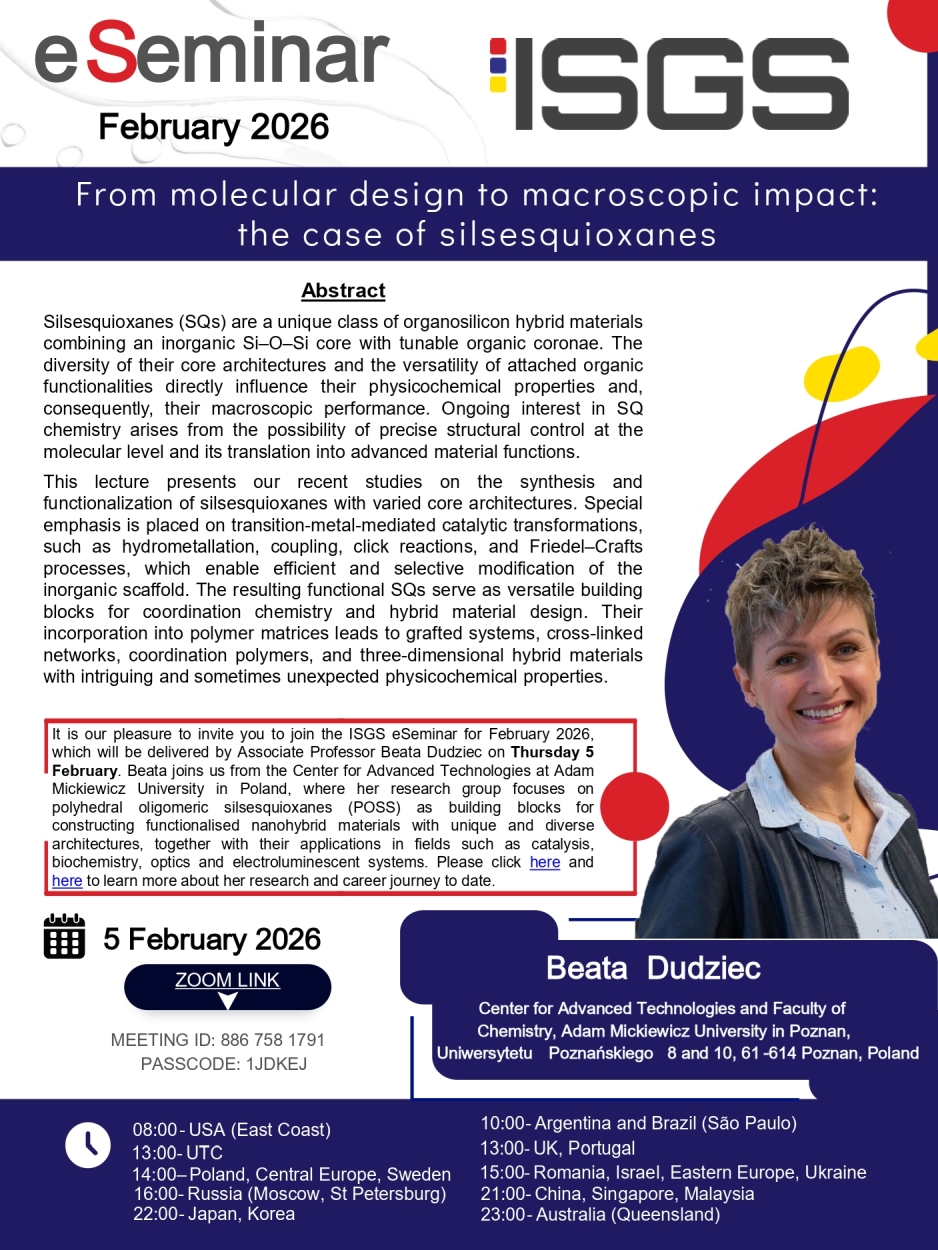
The International Sol-Gel Society – an eSeminar


Last Thursday, February 5th, I gave an online lecture for the International Sol-Gel Society (ISGS), which was organised by Prof. John Bartlett from Western Sydney University. It was an honour to have this great opportunity to show our results in front of such a reputable audience. There were more than 50 people online, and I was asked interesting questions. Anyone who is interested in doing some research with us is welcome to contact me.
There is also a Sol-Gel conference in Lisbon this year: https://www.solgel2026.org/ . An interesting opportunity?

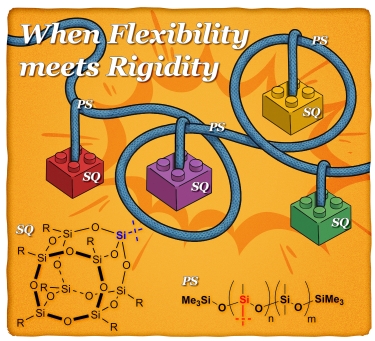
When flexibility meets rigidity – new paper


Nasz pierwsza praca w 2026r. w czasopiśmie Polymer (Elsevier) pokazuje, jak architektura klatek silseskwioksanowych precyzyjnie steruje właściwościami hybrydowych polisiloksanów. Wykazaliśmy zależności struktura–właściwości, ujawniając kluczową rolę rodzaju podstawników (Ph vs. iBu) oraz długości łącznika w kształtowaniu stabilności termicznej, morfologii i właściwości mechanicznych. Praca stanowi solidną podstawę do racjonalnego projektowania wysokowydajnych materiałów hybrydowych o właściwościach dopasowanych do zastosowań. Gratulacje dla Autorów!

Continue reading →

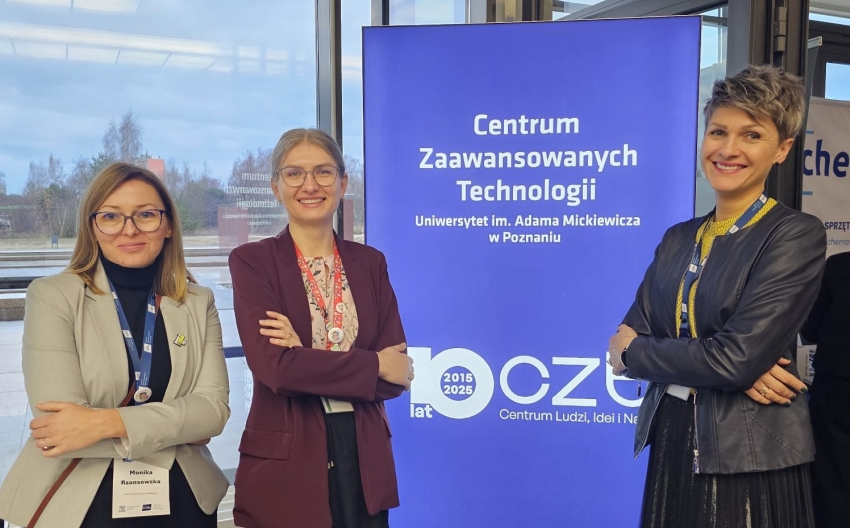
10 years of CAT – 10-11.12.2025

Celebrating 10 Years of CAT – A Decade of Scientific Impact 🚀

This year marks the 10th anniversary of CAT, a milestone that reflects a decade of outstanding contributions to science in Poznań and across Poland. Over the past ten years, CAT has become a vital part of the scientific landscape—driving innovation, fostering collaboration, and supporting cutting-edge research that reaches far beyond regional borders.

Congrats to the Father of this initiative and 1st Director- Prof. Bogdan Marciniec, former Director Prof. Bronisłąw Marciniak and current Director – Prof. Artur Stefankiewicz. Continue reading →