
Welcome Lara – our new Erasmus Student

http://www.freepik.com

We have been hosting an Erasmus Student – Ilgaz Lara Toraman from Turkey, from the Faculty of Science, Eskisehir Technical University in Turkey. She is performing her 4-months Internship. Last week, we had a small welcome party to greet Lara in our Group and also to show her some places in the Old Market. Also, we visited the typically Polish restaurant “Bamberka” so that we could try the traditional cuisine of Poland and our region. Continue reading →
The 5th SFM 2021 – online on 24-25.09 – Beijing, China

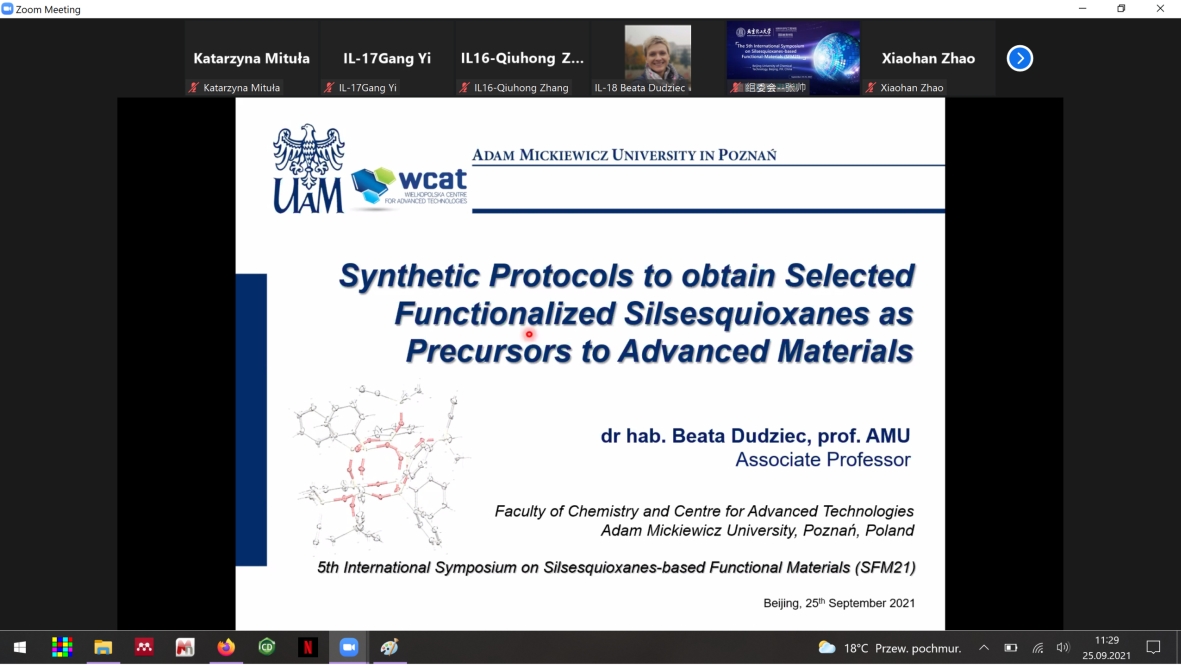
On 24-25 September 2021, we were taking part in the 5th International Symposium on Silsesquioxane-Based Functional Materials, organized and held by Beijing University of Chemical Technology, Beijing, P.R. China (Chairman: Prof. Qifang Li). This was the online version of the symposium. Distinguished scientists from all over the world who contributed to the development of Silsesquioxanes-Based Materials presented their results, i.a. prof. R. Laine, prof. M. Unno, prof. H. Liu, prof. M. Wong-Chi-Man and others. Continue reading →

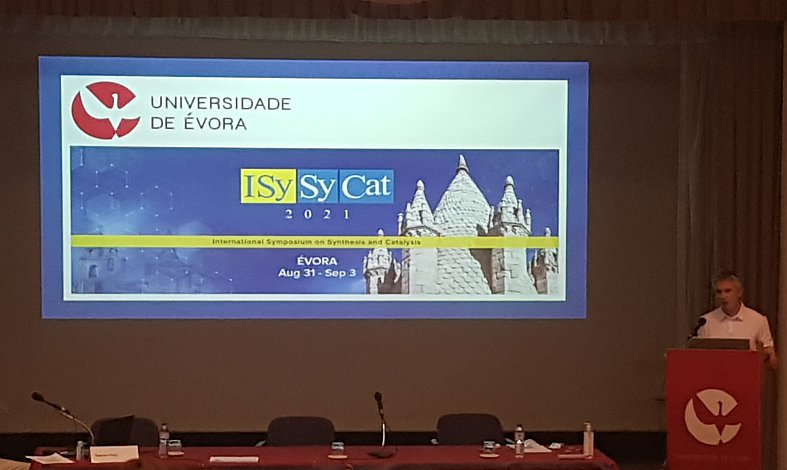
ISySyCat 2021 Conference in Évora (31.08-4.09.2021), Portugal

Finally, we did it. Our Team’s first visit and participation in a foreign conference during the COVID-19 pandemic.
The ISySyCat 2021 conference (https://isysycat2021.events.chemistry.pt/) that was organized on August 31 – September 3, 2021, took place in the beautiful city of Évora (Portugal). This great Scientific Event was devoted to the issues of synthesis and catalysis in chemistry (bio-)organic, organometallic and polymer chemistry. The nice atmosphere of the conference was conducive not only to scientific disputes… 🙂

Continue reading →

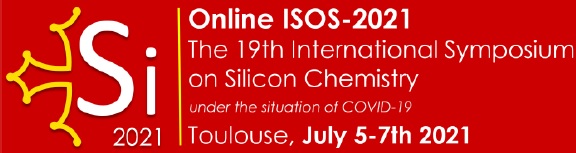
Online 19th International Symposium on Silicon Chemistry 2021 – Toulouse

19th International Symposium on Silicon Chemistry 2021 took place between 5-7th July 2021, in Toulouse. This is one of the most important international conferences in the field of organosilicon chemistry. This year, due to the COVID-19 pandemic situation, the conference was conducted only remotely.  Even though, it was a great opportunity to exchange scientific information, seek potential research groups for future collaboration, internships, etc. Continue reading →

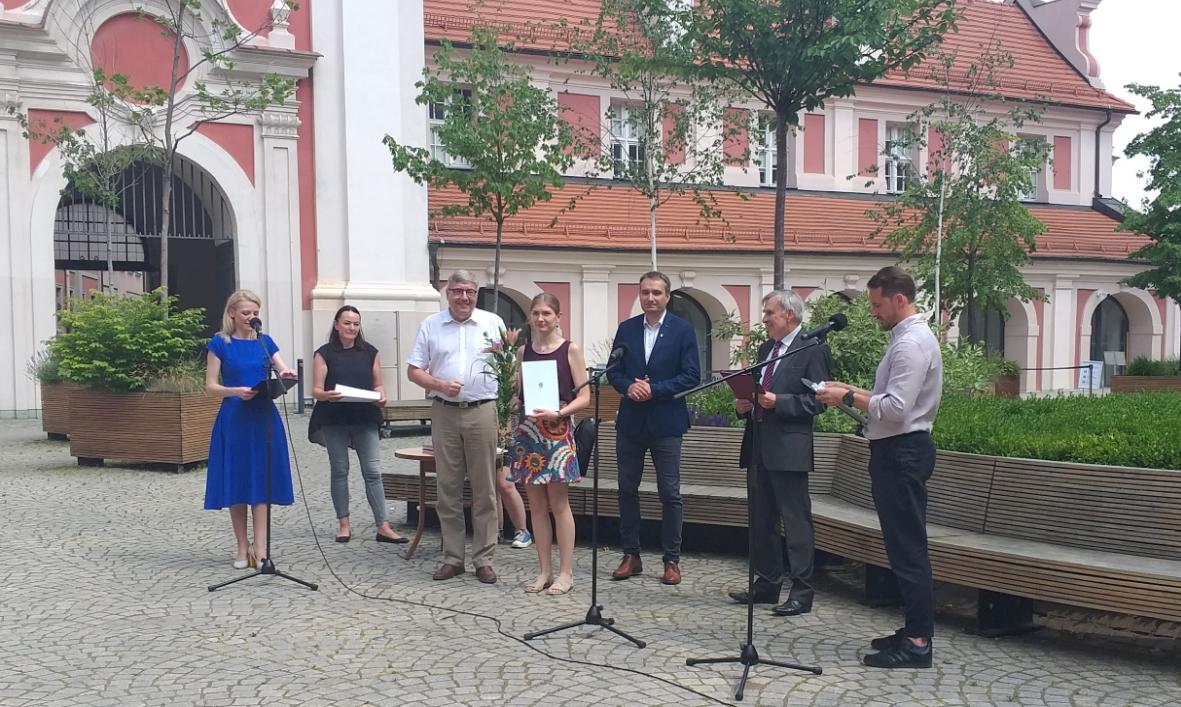
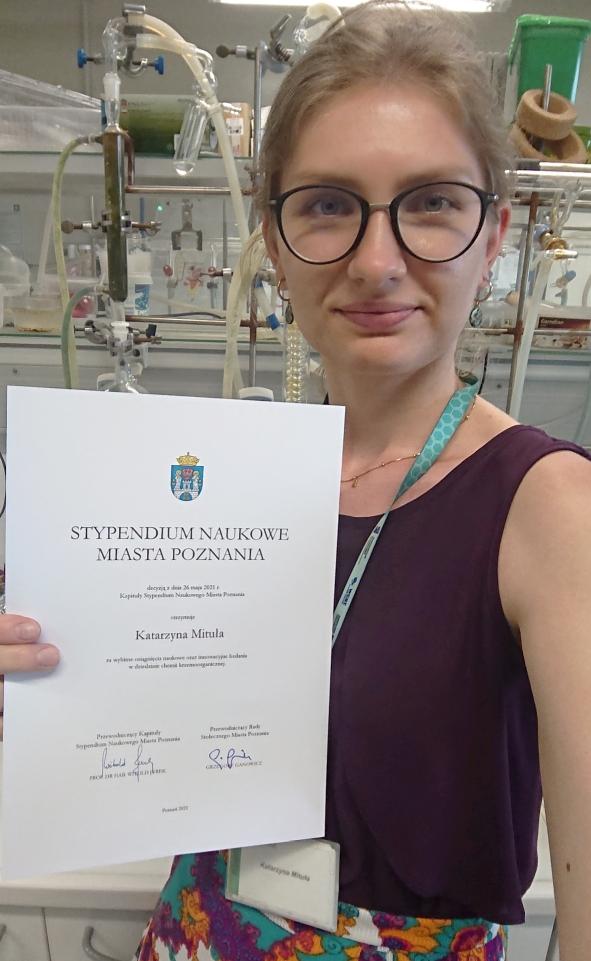
Scholarships for Young Researchers from Poznan Scientific Community

The award ceremony for MSc Katarzyna Mituła

Poznan city honoured the achievements of Researchers who are under 30 years of age. MSc Kasia Mituła was among 5 persons from Adam Mickiewicz University out of 13 people awarded this prestigious Scholarship (also called the Small Science Award of the City of Poznan) for impressive scientific achievements. Kasia is a young and talented chemist who performs innovative research in the field of organosilicon chemistry and has already outstanding scientific attainments in this area. Kasia – Congratulations!!! We are very proud and wish you all the best in future! Continue reading →

Group Presentation for Students

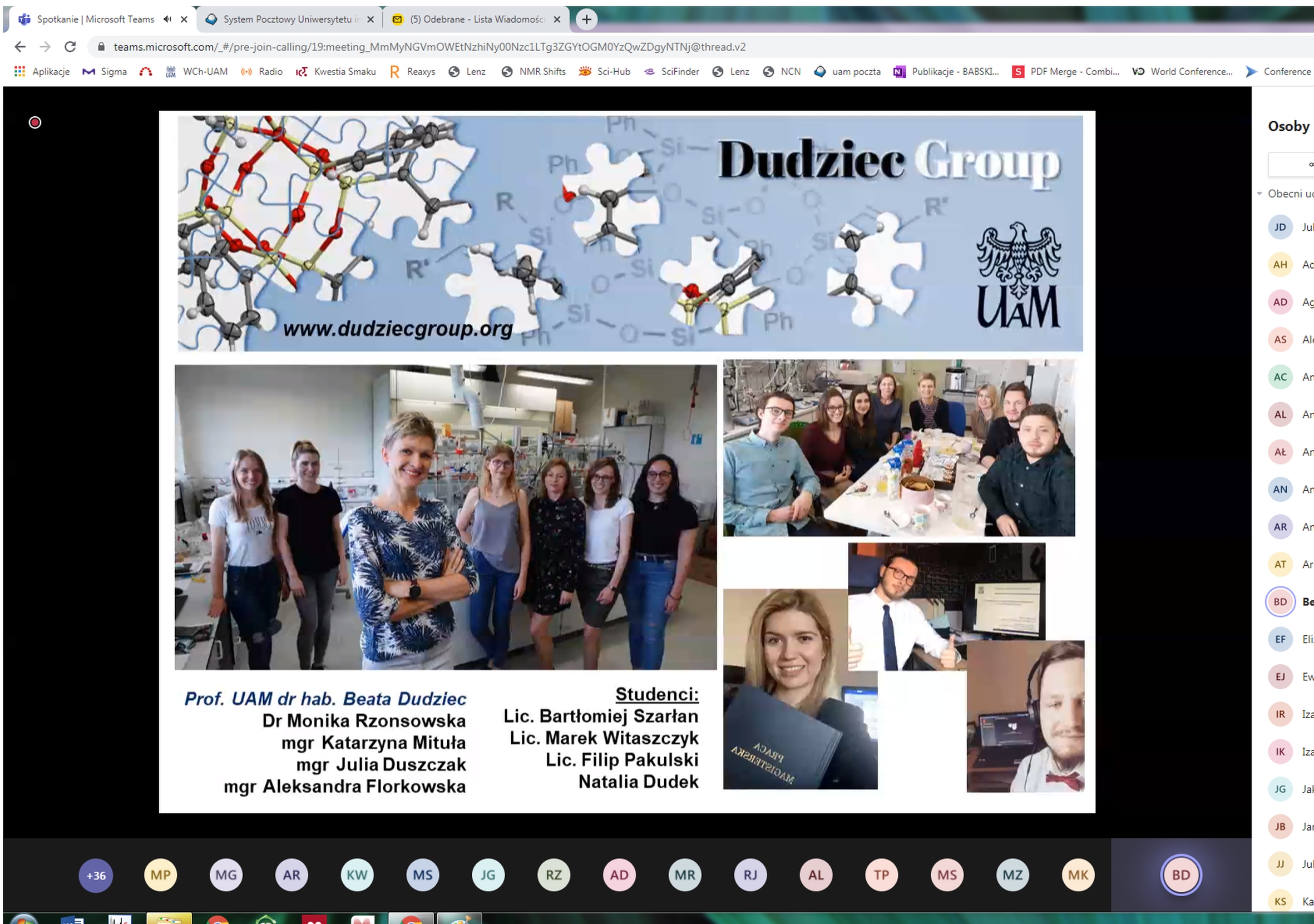
On the 12th of May prof. UAM dr hab. Beata Dudziec took part in an online meeting devoted to the presentation of the research groups that are working at our Faculty of Chemistry. More than twenty Professors and Doctors were demonstrating their main topics of scientific interest and possibilities of research to be conducted while joining their groups, etc. It was a great opportunity to show BA and MA students what chemists at our Faculty are doing at labs and to encourage them to join their particular groups. Prof. UAM dr hab. Beata Dudziec was telling about the chemistry of silsesquioxanes i.e. showing another face of silicon. All interested in future collaboration are welcomed. Please feel free to contact us.


Great work with Belgium Group!

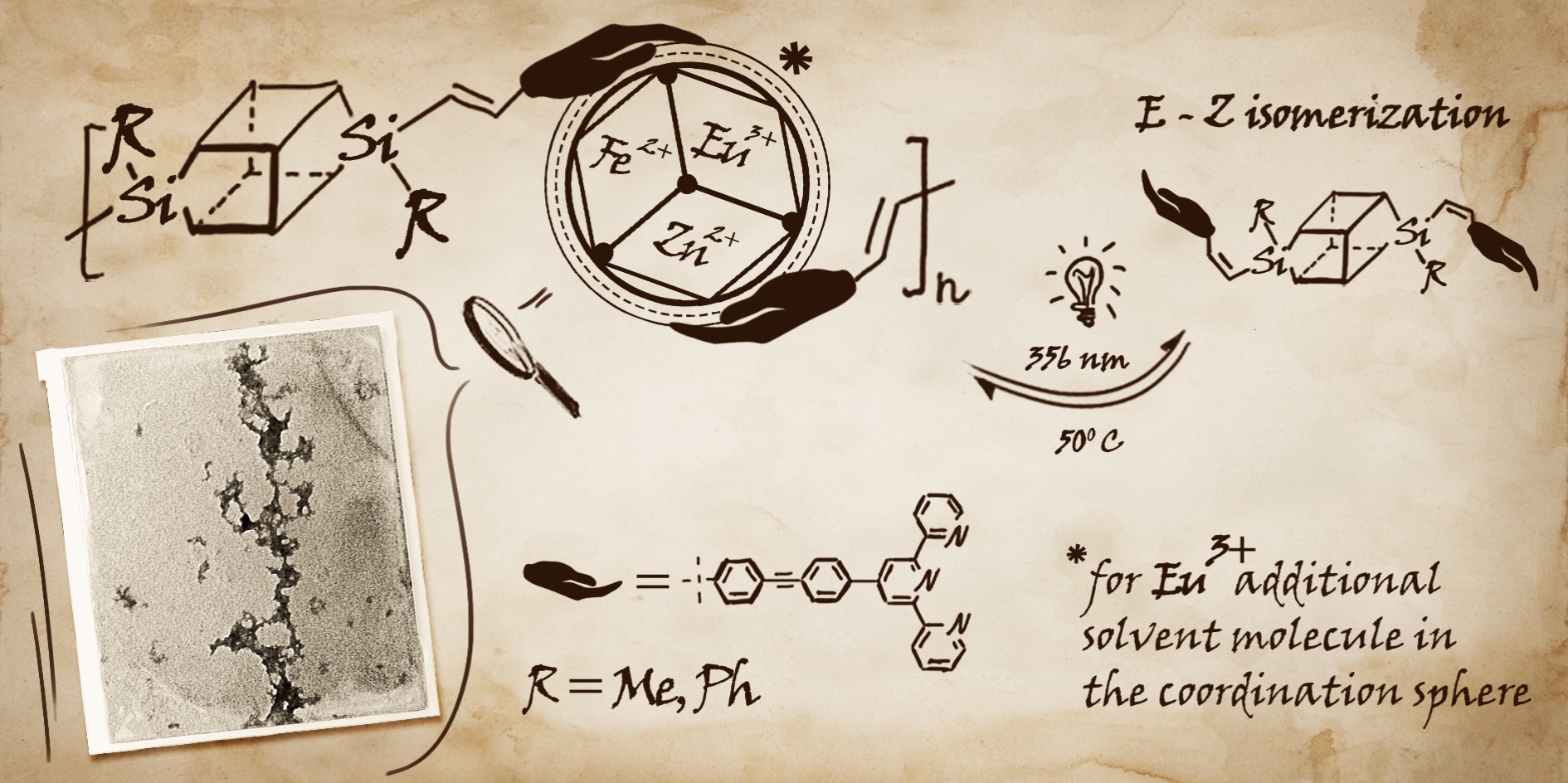
Our next paper derives from a collaboration with prof. Carmela Aprile Research Group from the University of Namur! This work is the effect of Kasia Mituła and Julia Duszczak internship in Belgium last year. It is focused on an efficient and selective synthetic approach to novel difunctionalized DDSQs with two (styrylethynylphenyl)-terpyridine moieties obtained via consecutive silylative and Sonogashira coupling reaction. This is the first example demonstrating the catalytic reactivity of disubstituted DDSQs in Sonogashira coupling and an important aspect revealing the potential application of these frameworks. Continue reading →

On-line seminar at Bowling Green State University, Ohio, USA

Prof. Joseph Furgal from the Department of Chemistry and Center for Photochemical Sciences, Bowling Green State University (USA) invited dr hab. Beata Dudziec to present results of our research group in an online seminar for Ph.D. students on 14th of April 2021 at 3:30 pm US EST. Beata Dudziec presented a lecture entitled “Functionalized silsesquioxanes as building blocks for organosilicon systems”. Continue reading →

1st paper in 2021 with silsesquioxanes and triazole moiety

GA_Molecules

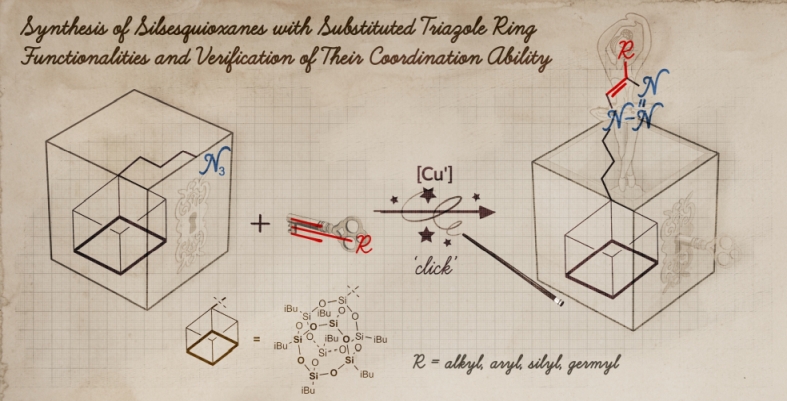
Our first paper in 2021 has just been published and is dedicated to Professor Julian Chojnowski on the occasion of his 85th birthday. It was coordinated by Monika and is a part of the Master Thesis of Kasia Kozakiewicz, the MSc Student who was working on this subject in 2019/20. It concerns the Copper(I)-catalyzed Azide-Alkyne Cycloaddition (CuAAC) process as a method for the synthesis of mono- T8 and difunctionalized double-decker silsesquioxanes bearing substituted triazole ring(s). Diverse alkynes were in the scope of our interest, i.e. aryl, hetaryl, alkyl, silyl and germyl. The terminal germane alkyne SQ-based derivative has been found reactive in the CuAAC for the first time. Continue reading →

Results for grafting of polysiloxanes – new paper

polysiloxanes grafting

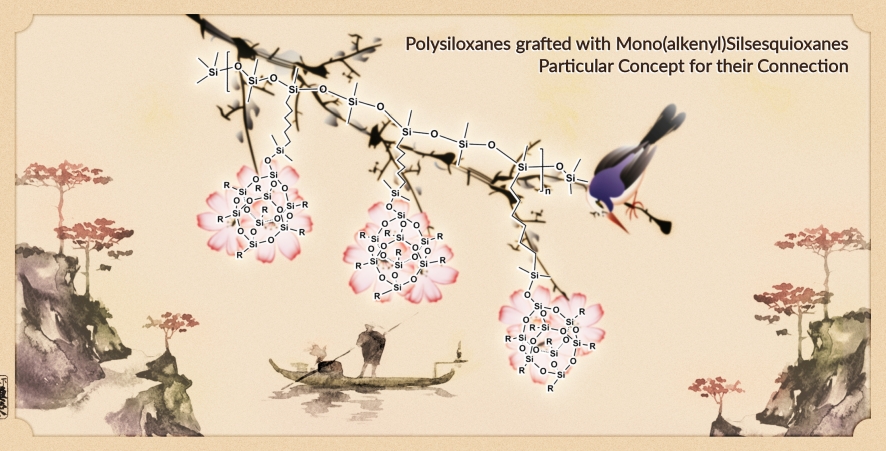
We have just published a new article in Materials. This work is dedicated to Professor Bogdan Marciniec on the occasion of his forthcoming 80th birthday. It presents Kasia’s further studies in the issue of the formation of new hybrid materials based on polysiloxanes and silsesquioxanes. We proposed a facile and efficient synthetic route towards unique hybrid materials containing polysiloxanes and mono(alkyl)silsesquioxanes as their pendant modifiers (T8@PS). The idea of this work was to apply the hydrosilylation reaction as a tool for efficient and selective attachment of mono(alkenyl)substituted silsesquioxanes (differing in the alkenyl chain length, from -vinyl to -dec-9-enyl and types of inert groups- iBu, Ph at the inorganic core) Continue reading →